Stepping through the towering gates of Fes feels like walking directly into the Middle Ages. Known as the spiritual, cultural, and intellectual capital of Morocco, this imperial city preserves a way of life that has thrived for over twelve centuries. Any comprehensive Fes travel guide must start with its defining feature: the world’s largest contiguous car-free urban area. Here, narrow labyrinthine alleyways echo with the calls of merchants, the clopping of pack mules, and the scent of cedarwood, crushed spices, and steeped mint tea.
Whether you are navigating the medieval maze of the old quarters or discovering centuries-old artisan traditions, preparing your journey with an accurate Fes travel guide ensures an unforgettable adventure through Morocco’s most authentic imperial treasure.
Introduction & Quick Overview of Fes
Founded in 789 AD by Idris I and significantly expanded by his son Idris II, Fes served as Morocco’s capital for multiple dynasties. Today, it stands proudly alongside Marrakesh, Rabat, and Meknes as one of Morocco’s four historic imperial cities. Unlike Marrakesh, which pulses with contemporary tourism and high-energy luxury resorts, Fes remains steeped in authentic Moroccan heritage, scholarly reverence, and artisanal craftsmanship.
The city offers an intoxicating experience for travelers seeking deep cultural immersion, architectural brilliance, and living history. Because vehicular traffic cannot enter the ancient core, walking remains the sole mode of travel within the walls. Using a detailed Fes travel guide gives you the layout, historical context, and practical navigation strategies needed to explore this living museum confidently.
Major Regions & Historical Quarters of Fes
Understanding the geography of Fes is critical because the city is divided into three distinct urban zones, each reflecting a separate historical era:
Fes el-Bali (Old Fes)
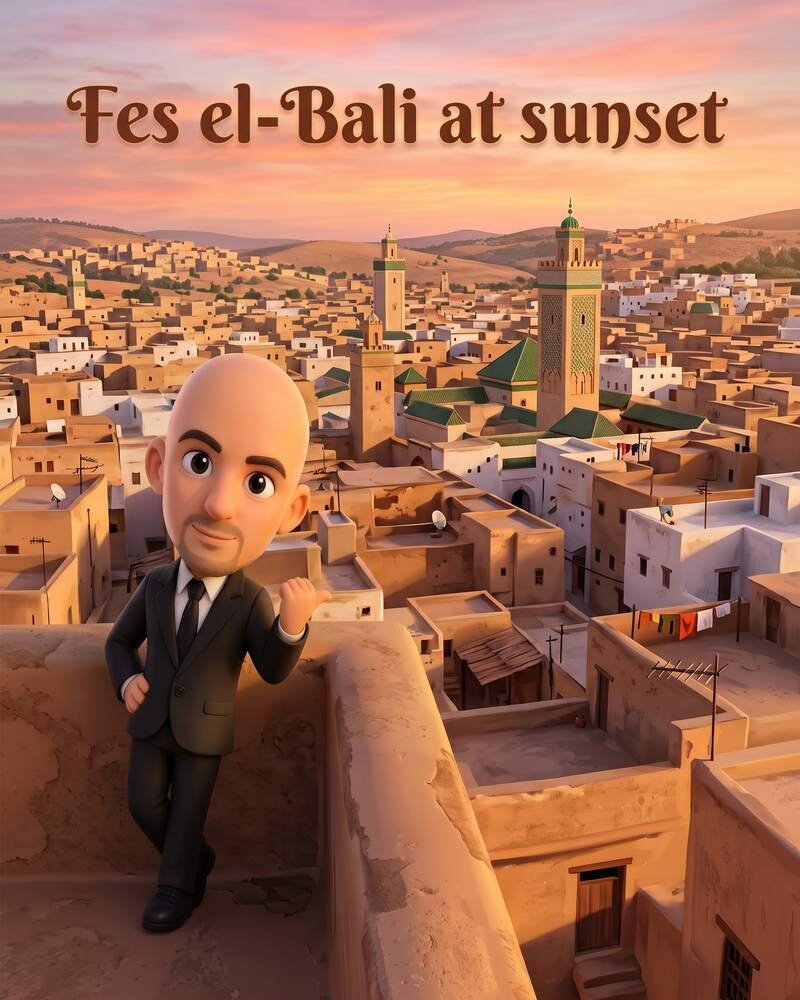
The beating heart of the city, founded in the late 8th century. Fes el-Bali contains over 9,000 winding alleyways, historic mosques, bustling markets, and ancient craft quarters. Enclosed by medieval ramparts, it represents the primary destination for cultural exploration and the focal point of this Fes travel guide.
Fes el-Jdid (New Fes)
Constructed in the 13th century under the Marinid dynasty, Fes el-Jdid features the majestic Royal Palace (Dar al-Makhzen), monumental defensive bastions, and the historic Jewish Quarter (Mellah). Its streets are wider and more linear than those of Fes el-Bali.
Ville Nouvelle (The New City)
Established during the French Protectorate in the early 20th century, the Ville Nouvelle features wide tree-lined boulevards, European-style cafes, modern banks, and the central train station. It provides a stark modern contrast to the medieval core.
Best Time to Visit & Weather Conditions
Timing your trip properly transforms your travel experience. Because inland northern Morocco experiences seasonal extremes, consulting a Fes travel guide for climate patterns is vital.
| Season | Months | Average Temperatures | Best For |
| Spring | March – May | 18°C – 26°C (64°F – 79°F) | Ideal sightseeing, garden blooms, pleasant walking |
| Autumn | September – November | 20°C – 28°C (68°F – 82°F) | Mild weather, comfortable walking, outdoor day trips |
| Winter | December – February | 8°C – 16°C (46°F – 61°F) | Fewer crowds, budget stays (cold, crisp nights) |
| Summer | June – August | 32°C – 42°C (90°F – 108°F) | Poolside riad lounging; afternoons become scorching |
Spring and autumn remain the prime windows for exploring the stone alleyways comfortably. If visiting during summer, schedule your walking tours in the early morning and rest inside your courtyard riad during peak afternoon heat.
Visa & Entry Requirements
Entering Morocco is straightforward for most international travelers:
-
Visa-Free Entry: Citizens from the United States, Canada, the United Kingdom, the European Union, Australia, and GCC nations can enter Morocco visa-free for tourist stays of up to 90 days.
-
Passport Validity: Your passport must be valid for at least six months beyond your planned departure date and contain at least one blank page for entry and exit stamps.
-
Customs Rules: Declaring foreign currency exceeding 100,000 Moroccan Dirhams (MAD) is required upon arrival. Always keep a digital and printed copy of your lodging reservation for border officers.
How to Get There & Local Transportation
Fes is exceptionally well connected by air, rail, and road networks across Morocco:
[IMAGE_2_PLACEHOLDER: The ornate blue mosaic facade of Bab Bou Jeloud gate under a clear sky]
Alt text: The ornate blue and green mosaic tilework of Bab Bou Jeloud the Blue Gate in Fes Morocco
Caption: Bab Bou Jeloud marks the main western entry to Fes el-Bali
Arriving by Air
Fes-Saïss Airport (FEZ) sits approximately 15 kilometers south of the city center. It handles direct flights from major European hubs and domestic connections from Casablanca. Official airport taxis charge a fixed rate (around 120–150 MAD) into the city center.
Arriving by Train (ONCF)
Morocco's national rail system (ONCF) provides comfortable, punctual transit directly into the Fes Ville Nouvelle station. High-speed Al Boraq trains connect Tangier to Casablanca, with smooth regular express transfers into Fes.
Getting Around the City
-
Inside the Medina: Foot travel only. Motor vehicles are physically barred. Wear sturdy walking shoes with strong grip for smooth, sloping cobblestones.
-
Between Quarters: Red "Petits Taxis" operate on meters outside the Medina gates to transport travelers between Fes el-Bali, Fes el-Jdid, and the Ville Nouvelle. Always insist that the driver engage the meter (compteur).
Top Tourist Attractions & Landmarks
Every curated Fes travel guide highlights historic wonders that showcase Morocco’s artisan and architectural brilliance:
Bab Bou Jeloud (The Blue Gate)
The iconic grand gateway into Fes el-Bali, constructed in 1913. Its outer facade gleams with vibrant blue ceramic tiles representing the city, while the inner face shines in green, honoring Islam.
Chouara Tannery
Operating virtually unchanged since the 11th century, Chouara is the oldest and largest traditional leather tannery in Fes. Stone vessels filled with natural dyes—saffron, poppy, indigo, and pigeon guano—create a striking honeycomb visual best viewed from surrounding leather shop terraces.
[IMAGE_3_PLACEHOLDER: Overhead view of stone dye pits and artisans at the historic Chouara Tannery]
Alt text: Stone dyeing vats and leather workers processing hides at the historic Chouara Tannery in Fes
Caption: The iconic medieval dye pits of Chouara Tannery
University of Al-Qarawiyyin
Recognized by UNESCO and the Guinness Book of Records as the oldest continually operating university in the world, founded in 859 AD by Fatima al-Fihri. While the central mosque and library preserve sacred spaces for Muslim worshipers, visitors can admire its majestic carved wooden doors and marble arcades through open entrances.
Bou Inania Medersa
One of the rare Islamic monuments in Morocco accessible to non-Muslim visitors. Built between 1351 and 1356 by Sultan Abu Inan Faris, it showcases breathtaking cedar woodwork, intricate stucco plaster carvings, and elaborate geometric zellij tile designs.
Al-Attarine Medersa
Located right next to the spice market, this smaller Marinid madrasa boasts some of the most delicate Islamic decorative work in North Africa, with an open sunlit courtyard and peaceful study rooms.
Cultural & Historical Highlights
Fes serves as the soul of Moroccan artisan legacy. The Medina is meticulously divided into dedicated guilds: copper and brass beaters in Place Seffarine, cedarwood carvers in Souk Nejjarine, and silk weavers pulling looms in quiet courtyards.
Beyond crafts, Fes represents centuries of philosophical and religious tolerance. The historic Jewish Quarter (Mellah) in Fes el-Jdid preserves distinctive architecture characterized by exterior wrought-iron balconies and the meticulously restored Ibn Danan Synagogue, documenting centuries of peaceful cohabitation.
Natural Attractions & Day Trips
While the historic quarters could fill a lifetime of exploration, this Fes travel guide recommends several remarkable day trips within easy driving distance:
[IMAGE_4_PLACEHOLDER: The preserved Roman triumphal arch and stone columns at Volubilis near Fes]
Alt text: Preserved ancient Roman columns and triumphal arch standing at Volubilis near Meknes Morocco
Caption: The ancient UNESCO Roman ruins of Volubilis
-
Volubilis (Walili): The premier Roman archaeological site in Morocco, located just over an hour west of Fes. Wander among remarkably intact floor mosaics, triumphal arches, and civic basilicas surrounded by olive groves.
-
Meknes: An imperial sister city featuring the colossal Bab El-Mansour gate, royal granaries, and the serene Mausoleum of Moulay Ismail.
-
Mount Zalagh: The mountainous ridge rising directly north of Fes, providing sweeping panoramic views across the entire Saïss plain and the sprawling Medina basin below.
-
Bahlil & Sefrou: Charming agricultural foothills known for natural spring waterfalls and traditional cave dwellings inhabited for centuries.
Outdoor Activities & Adventure
While Fes centers primarily on heritage, outdoor enthusiasts can enjoy scenic activities around the region:
-
Panoramic Ridge Hikes: Hike the trails ascending Mount Zalagh for fresh mountain air and sweeping landscape views.
-
Rooftop Golden-Hour Walks: The undulating topography of the Medina makes rooftop exploration an adventure of its own, offering changing perspectives over historic minarets at sunset.
-
Atlas Cedar Forest Excursions: Head one hour south toward Ifrane and Azrou to hike among native Barbary macaque monkeys and ancient cedar groves.
Local Cuisine & Food Culture
Fes is universally heralded as the culinary capital of Moroccan gastronomy. The complex sweet-and-savory flavour profiles that define classic Moroccan cooking were largely perfected in the royal kitchens of this city.
[IMAGE_5_PLACEHOLDER: Traditional Moroccan chicken pastilla dusted with powdered sugar and cinnamon]
Alt text: Authentic Moroccan chicken pastilla dusted with cinnamon and powdered sugar served on ceramic platter
Caption: Traditional Moroccan Pastilla, the culinary hallmark of Fes
-
Pastilla (Bastilla): The crowning jewel of Fassi gastronomy. Layers of paper-thin warka pastry envelope tender shredded chicken (traditionally pigeon), crushed almonds, saffron, and aromatic spices, dusted delicately with powdered sugar and cinnamon.
-
Lamb & Prune Tajine: Tender, slow-cooked meat seasoned with ginger and saffron, topped with sweet glazed prunes and toasted sesame seeds.
-
Briouats & Harira: Flaky triangular pastries stuffed with minced meat or spiced cheese, paired with hearty lentil and chickpea tomato soup.
-
Fassi Mint Tea (Atay): Poured dramatically from high above to aerate the amber liquid and produce a frothy crown (regga).
Accommodation Options: Riads vs. Modern Hotels
Choosing where to stay defines your experience in Fes. Any seasoned Fes travel guide advises staying inside a traditional Riad—a historic townhome built around an interior central courtyard featuring fountains, orange trees, and mosaic tilework:
[IMAGE_6_PLACEHOLDER: Peaceful interior courtyard of a luxury Moroccan riad with turquoise plunge pool]
Alt text: Traditional Moroccan riad interior courtyard with carved plaster arches and central plunge pool
Caption: The quiet interior courtyard of an authentic Fassi riad
-
Traditional Riads (Medina): Provide total serenity away from bustling market streets. Options range from affordable, family-run guesthouses to restored architectural palaces.
-
Modern Luxury Hotels (Ville Nouvelle): Travelers seeking spacious gardens, sprawling swimming pools, on-site parking, and contemporary international amenities can opt for upscale hotels located in the French Quarter.
Budgeting & Travel Costs
Fes remains one of the most accessible travel destinations in North Africa. A realistic Fes travel guide cost breakdown helps you budget accurately:
-
Budget Travelers ($35 – $55 USD / day): Dorm bed or budget riad room, local street food, mint tea at neighborhood cafes, public bus transit, and unguided walking.
-
Mid-Range Travelers ($90 – $170 USD / day): Charming private riad room with breakfast, sit-down dinners at courtyard restaurants, entrance tickets, and licensed local walking guides.
-
Luxury Travelers ($300+ USD / day): Restored 5-star palace suites, private chauffeured day trips, fine dining degustation menus, and exclusive hammam spa treatments.
Essential Safety & Local Etiquette Tips
Navigating Fes el-Bali requires basic spatial awareness and cultural respect:
-
Handling Navigation & "Faux Guides": The maze of alleys can disorient first-timers. Download an offline map (like Maps.me) before setting out. If you lose your bearings, look for small wall signs pointing toward major landmarks (Bab Bou Jeloud or Place R'cif), or ask shopkeepers rather than idling street hustlers.
-
Respectful Dress Code: Fes is Morocco’s religious and conservative core. Dressing modestly—covering shoulders, upper arms, and knees—ensures respectful interactions across residential and market sectors.
-
Cash is Essential: Street merchants, small cafes, and taxi drivers rarely accept credit cards. Always carry Moroccan Dirham banknotes and coins for daily transactions.
-
Photography Manners: Always request permission before photographing local artisans or market stalls. A modest tip (5–10 MAD) is customary when photographing tannery workers or craftspeople.
The Ultimate 3-Day Fes Itinerary
This practical day-by-day plan integrates the highlights of this Fes travel guide into a smooth, rewarding flow:
Day 1: The Soul of the Ancient Medina
-
Morning: Enter through the majestic Bab Bou Jeloud gate. Visit the intricately carved Bou Inania Medersa before wandering down the bustling Tala'a Kebira thoroughfare.
-
Afternoon: Explore the University of Al-Qarawiyyin exterior and the nearby Al-Attarine Medersa. Browse brassware in Place Seffarine.
-
Late Afternoon: Visit the viewing terraces overlooking the Chouara Tannery to observe the ancient dyeing process.
-
Evening: Dine on authentic chicken pastilla inside a historic courtyard riad.
Day 2: Royal Heritage & Artisan Quarters
-
Morning: Take a short petit taxi to Fes el-Jdid. Photograph the golden brass doors of the Royal Palace (Dar al-Makhzen) and explore the historic Jewish Quarter (Mellah).
-
Afternoon: Visit the famous pottery and zellij ceramics cooperative outside the ramparts to see artisans hand-crafting mosaics and clay tagines.
-
Evening: Ascend to the Marinid Tombs on the northern hillside for a panoramic sunset over the entire Medina basin as the evening call to prayer echoes across the valley.
Day 3: Ancient Wonders & Day Excursions
-
Morning: Embark on a morning excursion to the sprawling Roman ruins of Volubilis, exploring ancient mosaic floors.
-
Afternoon: Stop in the historic imperial city of Meknes to view the monumental Bab El-Mansour gate and royal granaries.
-
Evening: Return to Fes for a traditional Moroccan hammam bath and a farewell mint tea on a scenic rooftop terrace.
Conclusion & Final Preparation
Fes is not merely a destination; it is a sensory immersion into a living medieval civilization. By following this complete Fes travel guide, you will navigate the ancient Medina alleys with poise, discover historic architecture, and experience the warmth of Moroccan hospitality. Prepare your senses, lace up your walking shoes, and step into the timeless wonder of Morocco’s imperial jewel.